

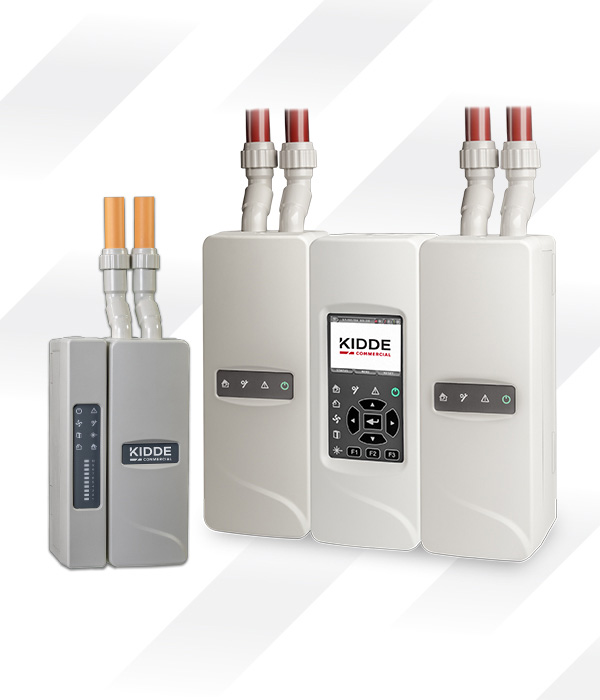
Kidde Commercial Aspirating Smoke Detection solutions are specialized in providing advanced fire protection in environments where early detection is critical or traditional spot detection isn’t adequate.
By continuously sampling air, ASDs can provide detection before visible smoke or heat is present, giving you an early warning that can be essential in preventing property, data, or equipment damage.
With our proprietary high-sensitivity and intelligent alarm filtering technology, Kidde Commercial ASDs help prevent false alarms and unplanned shutdowns, minimizing downtime in mission applications such as data centers, laboratories, advanced manufacturing facilities, and more.
Kidde Commercial carries a range of market-leading aspirating smoke detectors
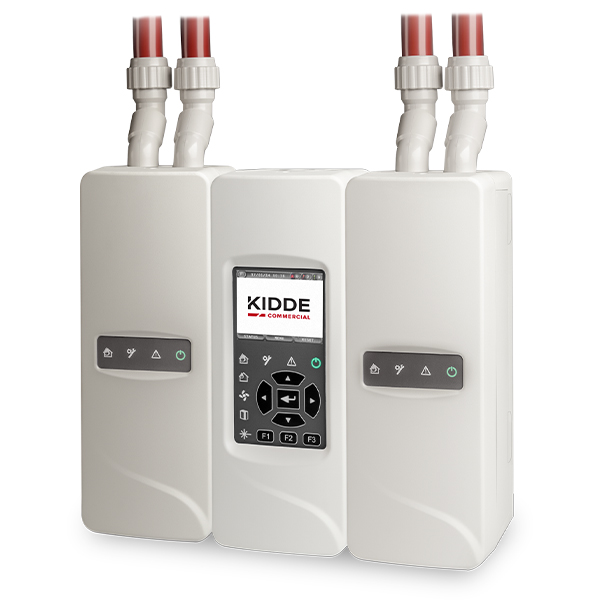
Designed for mid-to-large scale applications, ModuLaser is the first-ever modular-designed ASD, providing endless flexibility in how you design your ASD solution and where it can be utilized.
This multi-channel aspirating detection solution supports wide-area coverage through configurable detection architecture, with each detector serving up to 820 linear feet of sampling pipe.
Learn More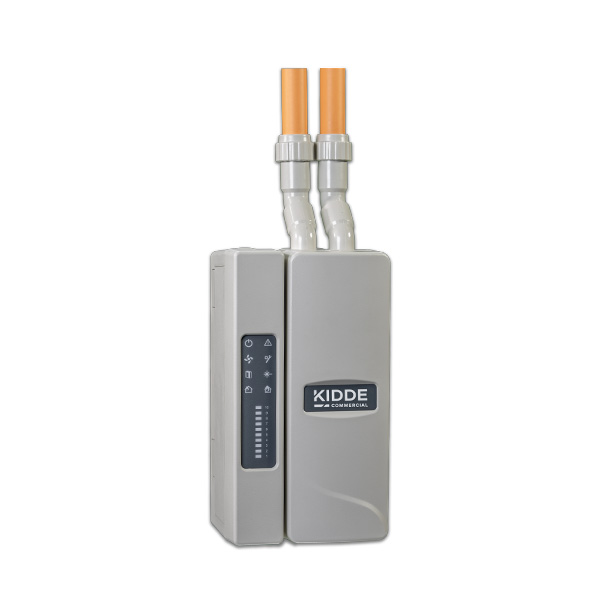
Engineered for small-to-medium spaces MiniLaser delivers the reliability for challenging environments in a technician-friendly, cost-effective solution. This single-zone ASD delivers precise early warning through simplified configuration, supporting up to 400 linear feet of combined sampling pipe.
Learn MoreOur innovative ASD products are engineered to perform in some of the harshest conditions and most critical environments.